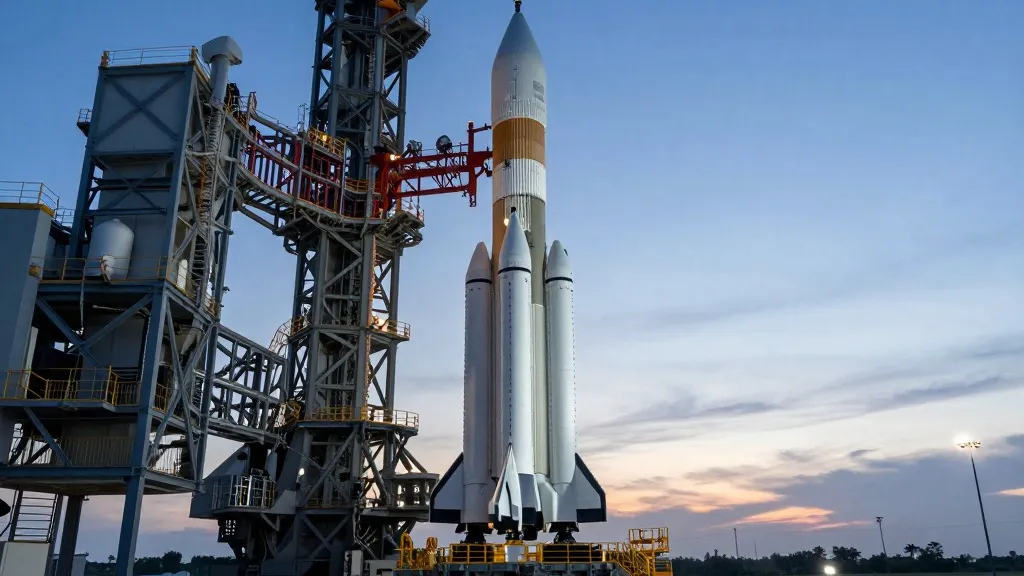
NASA Targets 2028 Lunar Return With Revised Architecture
A shift to high-Earth orbit docking and simplified Blue Origin launches aims to accelerate the Artemis program.
By Eduardo Salazar ·
NASA has officially locked in a target of 2028 for the next crewed landing on the Moon, a timeline that represents the most aggressive schedule in the agency's history for returning humans to the lunar surface. During a comprehensive news conference on Friday, officials presented the detailed architectural changes that underpin this ambitious goal, marking the first time the agency has publicly acknowledged the substantial shifts in its mission design for the Artemis program.
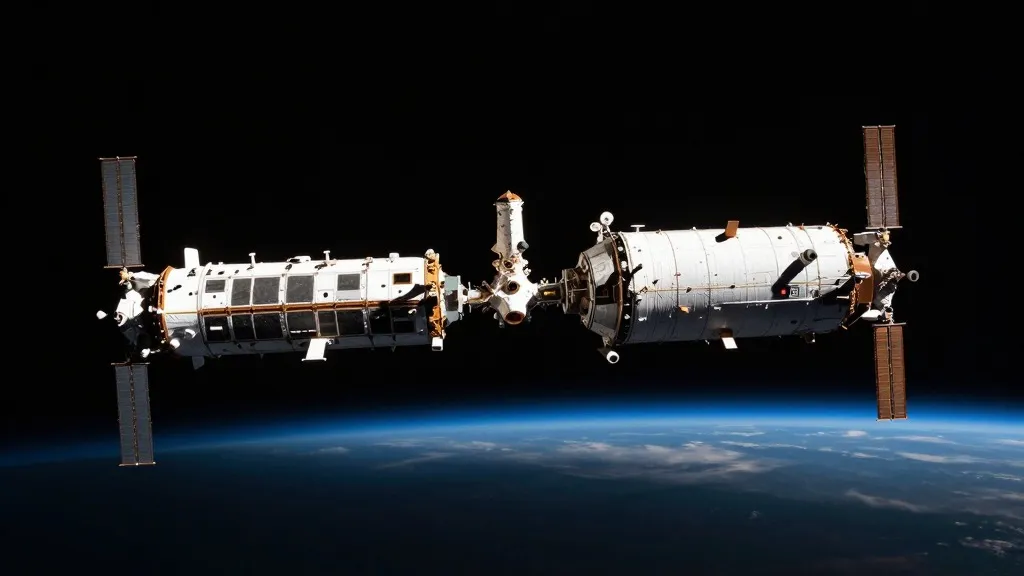
The most significant alteration involves SpaceX’s Starship vehicle. Under the revised plan, the Orion spacecraft will no longer travel all the way to the Moon before meeting the lander. Instead, Orion and the Starship lunar lander are now required to dock in high-Earth orbit. Only after this connection is established will the combined assembly transit to the Moon. This change addresses a key request from SpaceX engineers, who had previously argued that the original requirement to dock in a near-rectilinear halo orbit around the Moon demanded excessive energy and presented unique technical difficulties.
The simplification of the SpaceX docking procedure was partially enabled by the agency's decision earlier this year to cancel the Lunar Gateway project. By removing that element from the equation, NASA cleared a path for a more direct interaction between the Orion capsule and the Starship lander, effectively solving a long-festering engineering issue that had complicated the mission architecture.
Blue Origin’s path to the lunar surface also underwent a notable restructuring. The new plan for the company’s Blue Moon lander relies on four separate launches of the New Glenn rocket. Crucially, this architecture eliminates the need for spacecraft-to-spacecraft refueling in deep space. Additionally, the plan allows for the Blue Moon lander to rendezvous with Orion in low-Lunar orbit, providing another layer of operational flexibility for the agency.
Despite these architectural shifts, the broader timeline remains largely intact. NASA officials stated that they continue to anticipate launching the Artemis III mission by the summer of 2027. This mission serves as a critical demonstration, involving docking procedures with both the Blue Moon and Starship vehicles in the vicinity of Earth. Following this test, the agency is still tracking toward a 2028 launch for Artemis IV, which is the mission designated to actually place astronauts on the lunar surface.
NASA Administrator Jared Isaacman expressed confidence in the new strategy during the presentation. He described the current trajectory as an "achievable path," noting that the agency possesses the necessary mandate, resources, and stakeholder support to execute the plan. "We have the mandate, we have the resources, and the support from our stakeholders to be able to execute, and that’s what we intend to do," Isaacman said.
The agency’s willingness to adapt its architecture reflects a broader effort to streamline operations and assist the private lunar lander companies in accelerating their development schedules. By revisiting every element of the Artemis program, leadership has sought to remove bottlenecks that could have delayed the return to the Moon.
However, the question of whether these aggressive dates can be held remains a point of scrutiny. While the removal of complex orbital mechanics and refueling requirements simplifies the technical challenges, the compressed timeline leaves little margin for error in the coming months.
As the program moves forward, the focus will now shift to the execution of these new protocols. The upcoming Artemis III mission in 2027 will serve as the primary stress test for the revised architecture, determining whether the simplified docking procedures can hold up under operational conditions.
For now, the 2028 target stands as the official benchmark for the next lunar landing. Whether this date holds firm will depend on the successful integration of the Orion and Starship vehicles in high-Earth orbit and the flawless execution of the four-launch sequence for Blue Origin’s New Glenn rockets.
Source: Ars Technica