Space Force Offer Rejected by SpaceX as Spanish Miura 5 Near Final Assembly
The US military launch provider declined three contracts this week, while European rival PLD Space confirmed its rocket is entering final testing phases ahead of a 2027 debut.
By Fatima Zayed ·
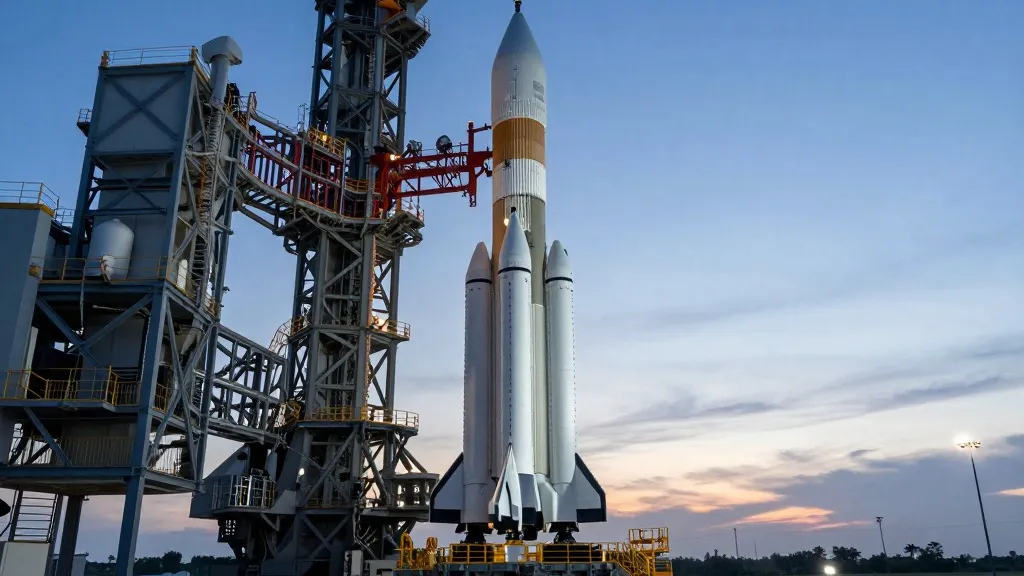
SpaceX has formally declined three launch contracts offered by the US Space Force, a decision that marks a significant shift in the company’s military engagement strategy. The rejection was announced this week, signaling that the private space giant may be prioritizing other commercial or civil sector opportunities over these specific government missions. This development comes at a time when the relationship between the private sector and the US military space branch is a focal point for industry analysts.
The Space Force had presented these three contracts as part of its ongoing effort to secure launch capabilities for national security payloads. By turning them down, SpaceX is effectively choosing which segments of the market it will aggressively pursue in the near term. The decision adds a layer of complexity to the Space Force’s procurement plans, which have increasingly relied on commercial providers to meet their launch cadence requirements.
In a separate development on the civil space front, a NASA safety panel issued a cautionary assessment regarding the company’s Starship vehicle. The panel indicated that a lunar landing mission could require as many as 22 in-orbit refueling operations. This high number of required refuelings highlights the technical challenges and logistical complexities involved in using Starship for deep space exploration, suggesting that the architecture for lunar missions may need further refinement or that the tanking requirements are more demanding than initially modeled.
Turning to international developments, the Spanish rocket company PLD Space has reported that its Miura 5 rocket is nearing the final stages of integration. The small-lift vehicle, which is slated for its inaugural flight before mid-2027, is one of three units already manufactured by the company. The other two vehicles were constructed to qualify key system elements, a strategy that allows engineering teams to apply lessons learned from qualification campaigns directly to the launch vehicle.
Raúl Torres, the CEO of PLD Space, noted in a program update on October 19 that the continuous work across different production stages has been beneficial. The company is currently focusing on a second stage that has been fully integrated to begin system-level testing. This specific stage is undergoing a qualification campaign at PLD’s test facility in Teruel, which includes a wet dress rehearsal and a static hot-fire test to ensure the vehicle performs under representative operating conditions.
Meanwhile, in Canada, startup Reaction Dynamics is seeking to raise $350 million to expand its workforce. The company aims to grow its staff from 68 to more than 350 people to support the development of its Aurora small-lift rocket. Reaction Dynamics hopes to reach orbit with Aurora in 2028, positioning itself as a key player in the North American launch market alongside other prominent Canadian startups.
In addition to the Aurora vehicle, Reaction Dynamics has outlined plans to develop a medium-lift rocket called Borealis. The company targets a debut for Borealis by 2031. This dual-rocket strategy allows the firm to address both small and medium payload requirements, aiming to capture a broader segment of the launch market as it scales its operations and infrastructure.
Source: Ars Technica